


Program for Electrical course
1. Subject
Working environment, basic principles of modeling, positioning elements, defining basic View parameters and organizing “Project Browser” (Discipline, Sub-discipline…).
2. Subject
Linking Arch. and Struc. Revit project file. Formation of Levels and definition of Monitoring between the Level of linked files and the Electro project. Defining views with different settings for working stroke depth and display.
3. Subject
Installation of Lighting Switches, Electrcal Fixture, Lighting Fixtures and distribution panels in the project.
4. Subject
Electrial Settings adjusting Cable Tray Settings & Conduit Settings. Installation of cable routes and conduits (Cable Trays, Conduits)
5. Subject
Electrial Settings defining Wire Sizes, Voltage Definitions and Distribution Systems. Places Electrical Eqipement. Setting up Electrical Circuits and connecting elements in them. Setting the path of the circuit, calculating the length of the wires
6. Subject
Assignment of Service Type. Forming new types and defining graphic display. Creating FILTERS and using them for different display variants in views, organization of views via View Template.
7. Subject
Labeling of elements and quotation in views and adjusting labels to our needs. (Tag, Text and Label).
8. Subject
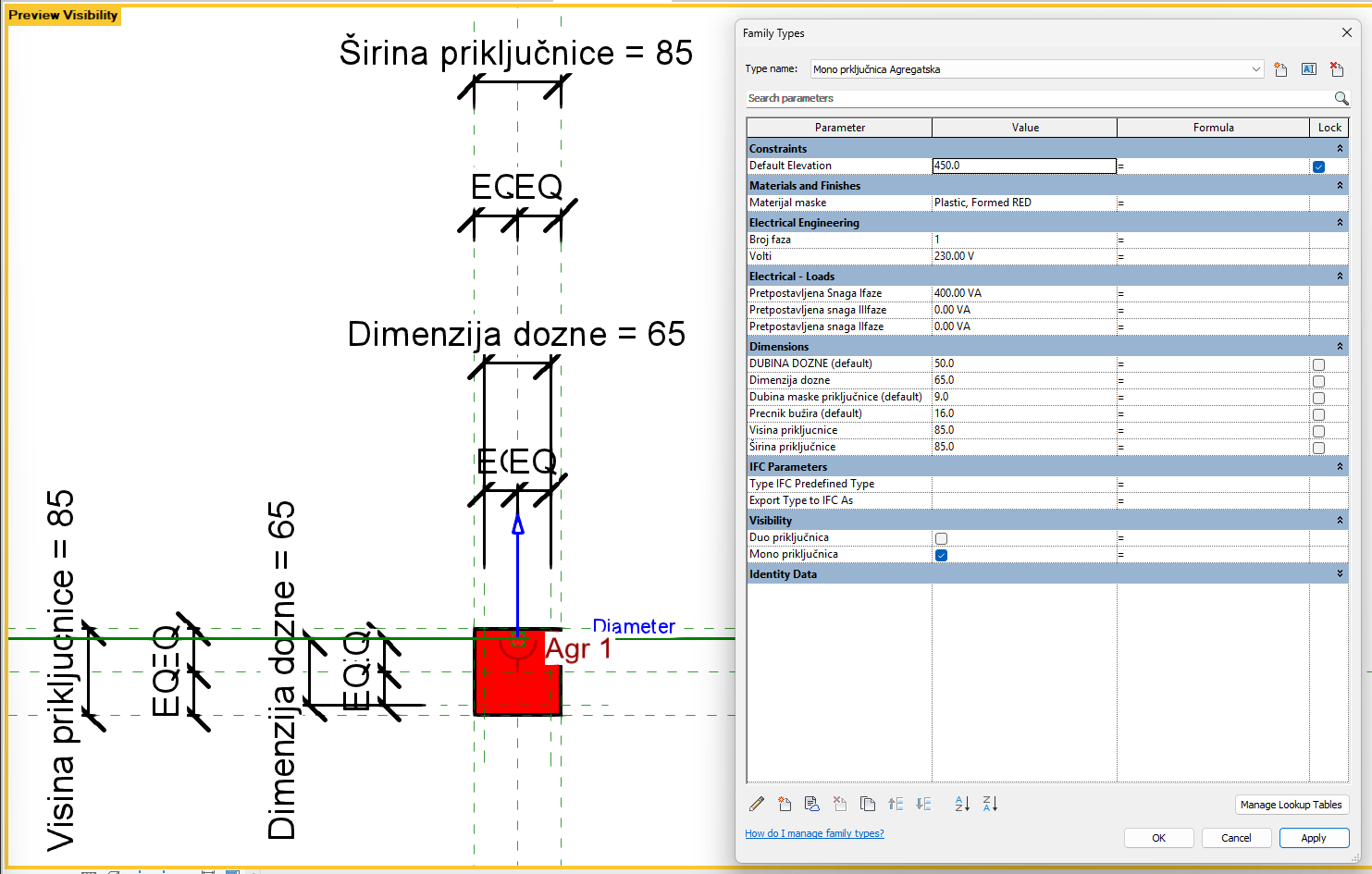
Creation of the Electrical Fixture Family. Basics of family modeling and creation of Dimensional and other Electrical Parameters.
9. Subject
Creation of the Electrical Fixture Family. Basics of family modeling and creation of Dimensional and other Electrical Parameters.
10. Subject
Placement of drawings (Views) on paper (Sheets). Making our Title Blok formats. Defining framing (Scope Box) for large projects for the same display of parts of the building by floor.
11. Subject
Link CAD and Import CAD to a Revit model. Most common Arch. 2D project for a reference. Positioning of Floor Plans and Sections.
12. Subject
Creation of schematics and drawings that are not related to the model Drafting View and Legends. The difference when positioning on paper.
13. Subject
Schedules/Quantities – Areas, positions and data bases (tables for the estimates and calculations).
14. Subject
Project Phases – Project development in phases.
15. Subject
Collaboration – – Variants of joint project work.